

Three workers collapsed from heat exhaustion last month at a Johor Bahru construction site, all wearing synthetic coveralls in 34-degree heat. This scenario repeats across Southeast Asia because 100 cotton coveralls remain the only practical choice for crews working 10-hour shifts in tropical humidity, yet most safety officers still struggle to match the right fabric weight, sizing, and pricing to their specific operations. Understanding how GSM ratings, fit patterns, and factory-direct costs compare will help you protect your crew without blowing your procurement budget.
What does GSM mean for cotton coveralls?
GSM (grams per square meter) measures the fabric weight of cotton coveralls, with higher GSM indicating thicker, more durable material. Standard workwear coveralls typically range from 175 GSM for lightweight tropical use to 270 GSM for heavy-duty industrial applications.
What is the difference between 175 GSM and 270 GSM cotton coveralls?
175 GSM cotton coveralls are lightweight and breathable, ideal for hot climates and light-duty work, while 270 GSM coveralls are 54% heavier, providing superior durability and protection for heavy industrial tasks and cooler environments. The 270 GSM fabric offers significantly better abrasion resistance and longer lifespan but reduces breathability in high-temperature conditions.
How much cheaper are factory direct cotton coveralls compared to distributor prices?
Factory direct cotton coveralls typically cost 30-45% less than distributor prices in Southeast Asia, with 175 GSM coveralls ranging from $8-12 direct versus $15-20 through distributors. The markup covers warehousing, logistics, and smaller order quantities that distributors accommodate for local buyers.
Table of Contents
- What GSM Actually Means for Your Crew's Workday
- 175 GSM vs 270 GSM Matching Fabric Weight to Job Conditions
- Sizing Reality European vs Asian Fit for Regional Crews
- Pricing Breakdown Factory Direct vs Distributor Markup
- Making the Right Choice for Your Operation
- Equipping Crews with the Right Cotton Coveralls
- Common Questions About Cotton Coveralls
What GSM Actually Means for Your Crew's Workday
Most workers have never heard of GSM, but they feel it every single day on the job. GSM stands for grams per square meter, which is just a fancy way of measuring how heavy fabric is. Think of it like this: if you cut out a one-meter square piece of fabric and weighed it, that number in grams is the GSM. A higher number means thicker, heavier fabric, while a lower number means lighter, thinner material.
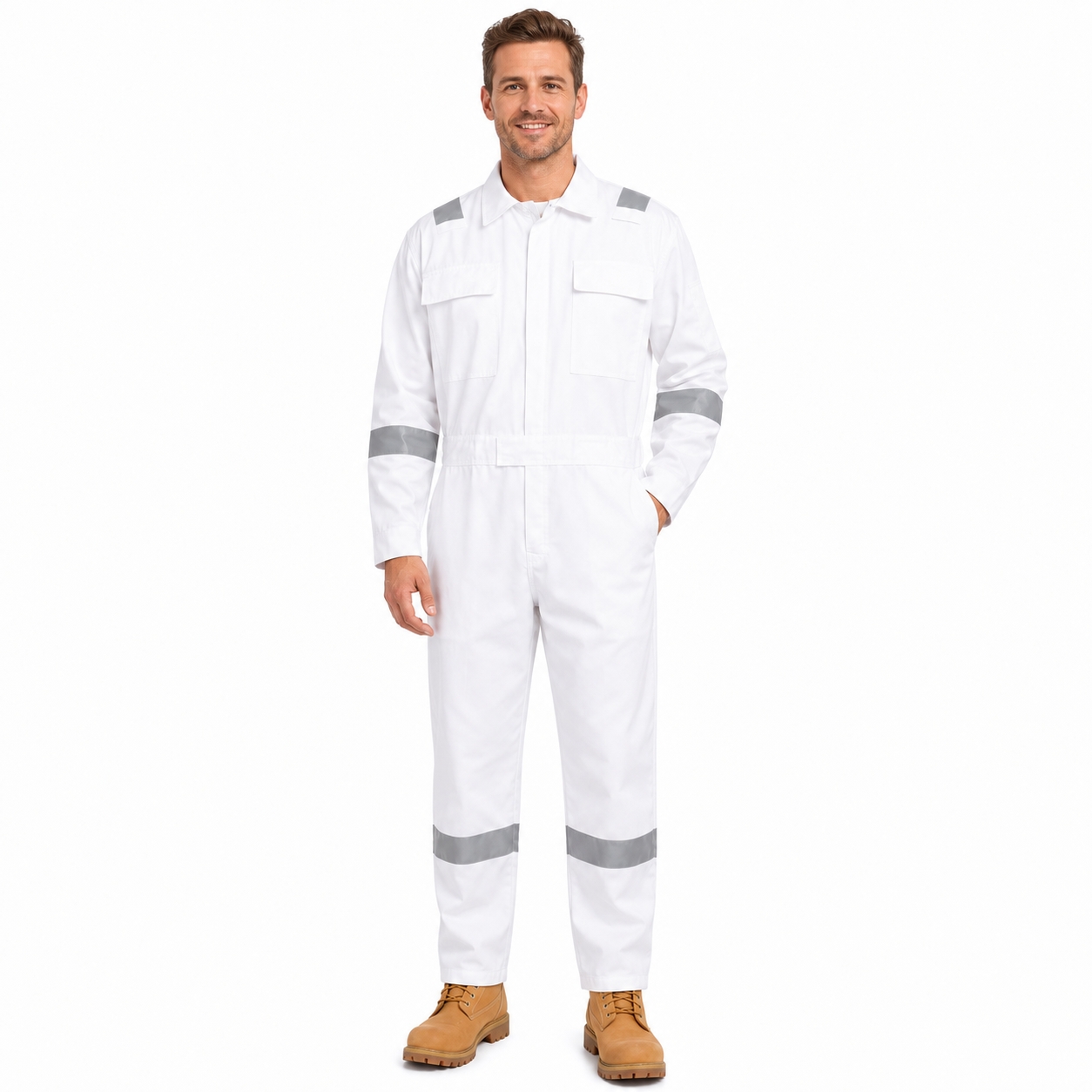
100% Cotton Coveralls with Reflective Tape — 175 GSM & 270 GSM
The weight of your coveralls changes everything about how they perform. Lighter fabrics breathe better and keep you cooler, which matters a lot when you're working outside in the heat or doing physically demanding tasks. Heavier fabrics give you more protection from sparks, abrasions, and rough surfaces, but they trap more heat against your body.
How Fabric Weight Affects Daily Comfort
The difference between 175 GSM and 270 GSM isn't just a number on a spec sheet. When you're six hours into a shift, that fabric weight determines whether you're comfortable or miserable. Our 100% cotton coveralls come in both weights specifically because different jobs need different solutions.
- 175 GSM fabric weighs about the same as a regular t-shirt, letting air flow through easily
- 270 GSM fabric is closer to denim weight, offering serious protection but less ventilation
- Temperature makes the biggest difference in which weight you should choose
- Work intensity matters too since harder physical work generates more body heat
Matching Fabric Weight to Work Conditions
Most suppliers like workxwear.com and industrialuniform.com.sg only offer one fabric weight, forcing you to compromise. But the right GSM depends entirely on where and how your crew works. According to OSHA guidelines on heat exposure, fabric choice directly impacts worker safety in hot environments.
| Specification | 175 GSM | 270 GSM |
|---|---|---|
| Fabric Weight | Light | Heavy |
| Breathability | High | Moderate |
| Best Temperature | Above 25°C | Below 25°C |
| Ideal For | Outdoor, humid work | Workshop, yard tasks |
| Durability Level | Good | Excellent |
| Abrasion Protection | Standard | Enhanced |
Quick Decision Guide for Buyers
Choosing the right GSM doesn't have to be complicated. Think about your hottest work days and your toughest job sites, then pick the fabric that handles your worst-case scenario. If you need help figuring out sizing once you've picked your fabric weight, check out our coverall size chart with factory measurements that covers everything from S to 5XL.
- Outdoor crews in Southeast Asia typically need 175 GSM for heat management
- Workshop mechanics and yard workers usually prefer 270 GSM for durability
- Ship chandlers often stock both weights to serve different vessel departments
175 GSM vs 270 GSM Matching Fabric Weight to Job Conditions
Most safety officers in Southeast Asia face the same problem when ordering coveralls: workers either complain about heat exhaustion or come back with torn fabric after a few weeks. The difference usually comes down to picking the wrong fabric weight for the job. Cotton coveralls come in two main weights — 175 GSM for lighter outdoor work and 270 GSM for heavy-duty tasks — and choosing wrong costs you money in medical claims or replacement orders. The 175 GSM option uses a plain weave cotton that breathes well in humid conditions, while the 270 GSM version has the same weave but with denser fabric that resists abrasion. Both weights include reflective tape on shoulders, sleeves, and legs for visibility, but the real question is which one keeps your crew safe without cooking them alive.
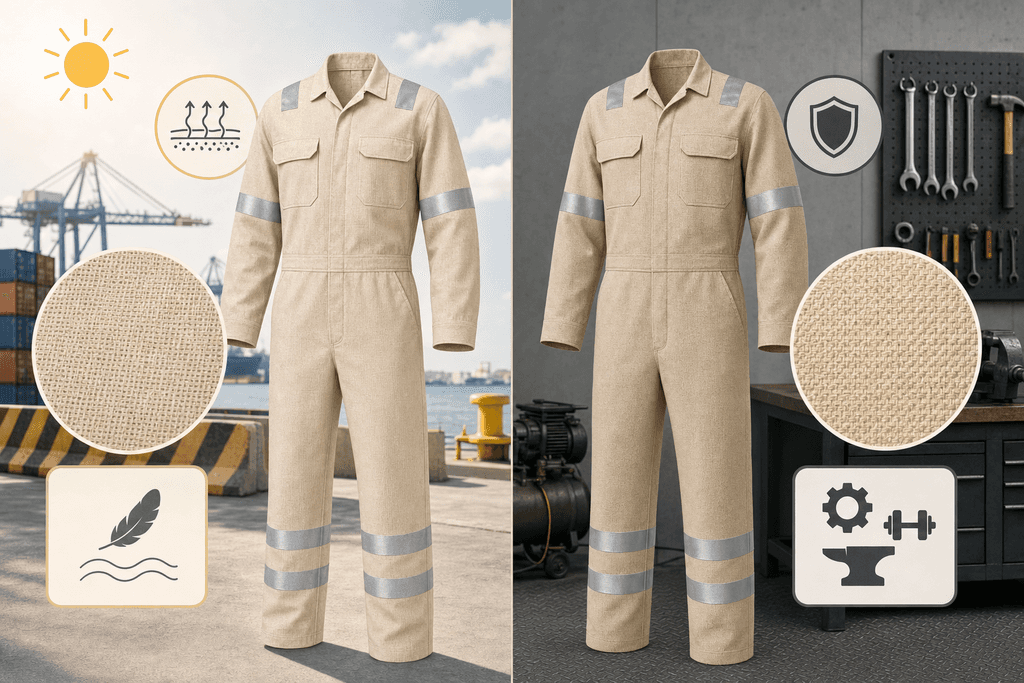
The 175 GSM fabric works best for outdoor port work, shipyard rigging, and logistics loading where temperatures hit 30-35°C daily. This lighter weight lets air move through the fabric, which matters when your crew is loading containers in direct sunlight for eight hours. The plain weave construction still provides decent protection against minor scrapes and dirt, but it won't hold up to welding sparks or heavy machinery contact.
- Port workers handling cargo in Singapore's heat
- Shipyard riggers working on deck installations
- Logistics crews loading trucks in open warehouses
- General maintenance staff doing outdoor facility work
The 270 GSM fabric is built for workshop mechanics, welding prep crews, and heavy equipment maintenance where abrasion resistance matters more than breathability. This heavier cotton can handle contact with rough metal edges, oil spills, and the occasional spark without tearing through. Workshop environments usually have some ventilation or air conditioning, so the extra weight doesn't cause the same heat stress issues you'd see outdoors.
175 GSM vs 270 GSM Comparison
| Feature | 175 GSM | 270 GSM |
|---|---|---|
| Best For | Outdoor humid work | Workshop heavy duty |
| Breathability | High | Moderate |
| Abrasion Resistance | Good | Excellent |
| Temperature Range | 30-35°C outdoor | Indoor climate controlled |
The real cost of picking wrong shows up fast. Heat exhaustion from heavy coveralls in outdoor work means lost productivity and potential medical claims. On the flip side, torn 175 GSM coveralls in a workshop environment means you're reordering every few months instead of getting a full year from the heavier fabric. Understanding coverall fabric construction helps you match the right weight to your specific work conditions.
Sizing Reality European vs Asian Fit for Regional Crews
Manning agencies and contractors in Southeast Asia deal with mixed crews every day — Filipino riggers, Indonesian welders, Indian mechanics, and European expat supervisors all need coveralls that actually fit. The difference between European and Asian fit patterns isn't just marketing talk; it's about chest width, waist taper, and inseam length that can make coveralls unwearable for half your crew. European fit assumes a taller, broader-shouldered build with longer legs, while Asian fit accounts for shorter inseams and different torso proportions. Most suppliers only stock one fit pattern, which means you end up with expensive inventory that nobody wants to wear because the sleeves drag on the ground or the chest won't button.
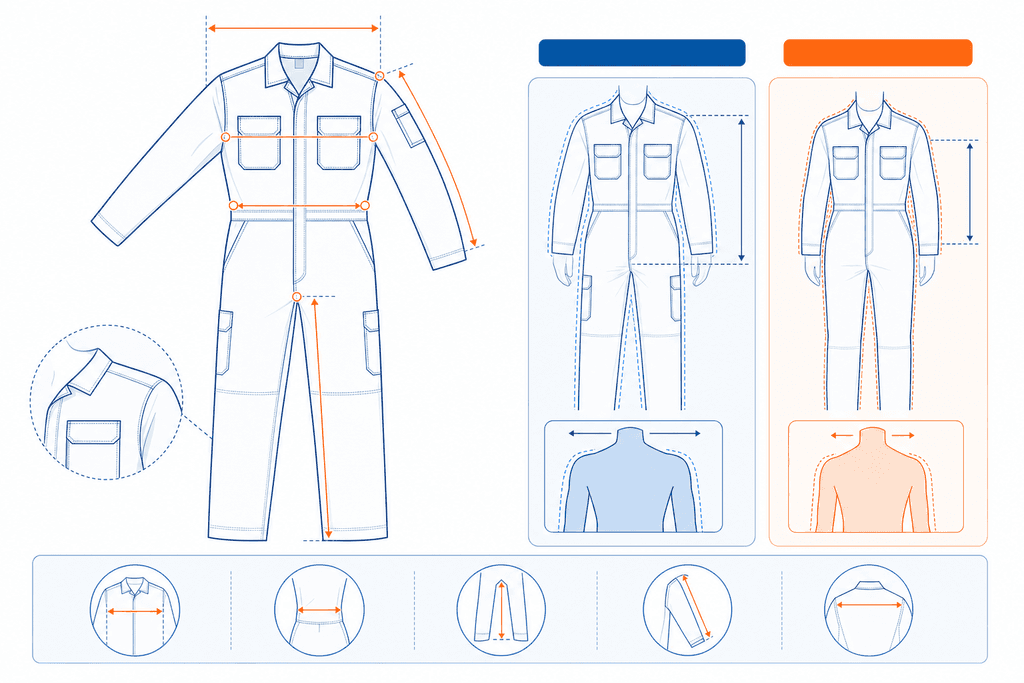
RigArmor's 100% cotton coveralls come in both European and Asian fits from M to 5XL, which covers most body types you'll find on a typical Southeast Asian worksite. The size range matters because a 5XL Asian fit isn't the same as a 5XL European fit — the measurements differ significantly in ways that affect comfort and safety.
| Size | Chest (cm) | Waist (cm) | Height (cm) | Weight (kg) |
|---|---|---|---|---|
| M Asian | 96-100 | 80-84 | 165-170 | 60-70 |
| M European | 100-104 | 84-88 | 170-175 | 70-80 |
| XL Asian | 108-112 | 92-96 | 170-175 | 75-85 |
| XL European | 112-116 | 96-100 | 175-180 | 85-95 |
| 5XL Asian | 128-132 | 112-116 | 175-180 | 100-110 |
| 5XL European | 132-136 | 116-120 | 180-185 | 110-120 |
The most common sizing mistake is ordering based on shirt size instead of actual measurements. A worker who wears XL t-shirts might need L or 2XL coveralls depending on whether they need room for layers underneath or have a longer torso. Measure chest circumference at the widest point, natural waist, and height before placing bulk orders.
Custom logo placement also changes with size — a chest logo that looks good on a medium might sit awkwardly on a 5XL. Industrial coverall fit guidelines recommend testing logo placement on sample sizes before committing to embroidery on 200 units.
Pricing Breakdown Factory Direct vs Distributor Markup
Distributors in Southeast Asia typically add 40-60% markup on 100% cotton coveralls before they reach your purchasing department. That markup covers their warehouse costs, sales commissions, and profit margins, but it doesn't add any value to the actual product you're buying. Factory direct pricing eliminates those middle layers, which is why RigArmor supplies both the 175 GSM and 270 GSM coveralls at $49.99 USD per unit regardless of fabric weight. The same coveralls through a local distributor would run you $70-80 USD each, and that's before you negotiate volume discounts. For a manning agency outfitting 100 workers, that difference adds up to $2,000-3,000 USD in unnecessary costs.
$49.99 USD
Base price per unit, both fabric weights
40-60% savings
Compared to distributor pricing
Volume pricing matters for contractors and manning agencies placing regular orders. Most factory suppliers offer tiered pricing that drops the per-unit cost as order quantities increase. The catch is minimum order quantities — some factories won't talk to you unless you're ordering 500+ units, which ties up cash flow for smaller operations.
- Shipping costs from factory to Southeast Asia ports (usually 2-3 weeks sea freight)
- Customs duties and clearance fees that vary by country
- Minimum order quantities that might exceed your actual needs
- Payment terms requiring deposits before production starts
The real value calculation is cost per wear over the coverall's lifespan. A 270 GSM coverall at $49.99 that lasts 12 months of workshop use costs about $0.19 per day. A cheaper $35 coverall that tears after 4 months costs $0.29 per day. The initial price difference disappears when you factor in replacement frequency.
Custom logo printing or embroidery adds to the base price, with setup fees typically ranging from $50-150 depending on complexity. Standard cotton coverall pricing varies widely across suppliers, but the key is understanding what's included in that price — reflective tape, multiple color options, and both fit patterns aren't always standard.
RigArmor ships direct from the factory to distributors, ship chandlers, manning agencies, and contractors across Southeast Asia, with delivery timelines of 2-4 weeks depending on order size and destination. The 100% cotton coveralls come in six colors with sizes M to 5XL in both European and Asian fits, making it easier to outfit mixed crews without maintaining excessive inventory.
Making the Right Choice for Your Operation
The difference between 175 GSM and 270 GSM 100 cotton coveralls comes down to three factors: climate conditions, work environment hazards, and how often workers move around. A lighter 175 GSM coverall works best when crews spend most of their day outdoors in temperatures above 25°C, while the heavier 270 GSM option makes sense for indoor workshops or outdoor work in cooler regions. Research on protective workwear efficiency shows that fabric weight directly impacts both protection levels and worker comfort during extended shifts. The wrong choice means either overheated workers who remove their PPE or underprotected teams facing abrasion injuries.
When to Choose 175 GSM Coveralls
The lighter fabric weight suits specific operational profiles better than others. Marine deck crews, outdoor logistics teams, and construction workers in tropical climates need breathability more than heavy-duty protection.
- Outdoor work in Southeast Asian climates where humidity stays above 70%
- Jobs requiring frequent climbing, bending, or extended mobility
- Deck operations on ships where wind provides natural cooling
- Loading dock and warehouse work with minimal machinery contact
When to Choose 270 GSM Coveralls
Heavier 100 cotton coveralls provide better protection against abrasion, sparks, and repeated washing. Workshop mechanics, welders, and equipment maintenance teams benefit from the extra fabric density.
- Indoor workshop environments with air conditioning or ventilation
- Work involving metal fabrication, grinding, or welding operations
- Equipment maintenance where contact with sharp edges occurs regularly
- Cooler climate operations or seasonal work below 20°C
Sizing Strategy for Multinational Crews
Manning agencies and ship chandlers face a common problem when crews include workers from different regions. RigArmor's dual fit system (European and Asian cuts) solves this by offering both body types in the same order, which competitors like workxwear.com and industrialuniform.com.sg typically don't provide without custom orders.
| Crew Profile | Recommended Fit Mix | Size Range Needed |
|---|---|---|
| Southeast Asian crews | 80% Asian fit | M to 2XL |
| Mixed nationality | 50/50 split | M to 4XL |
| European crews | 80% European fit | L to 5XL |
Budget Planning Beyond Unit Price
The cheapest coverall rarely delivers the lowest total cost. A 175 GSM coverall might last 6 months in a workshop environment where a 270 GSM option would last 18 months, making the heavier option 40% cheaper over time.
- Calculate replacement frequency based on actual work conditions, not manufacturer estimates
- Factor in washing durability for operations requiring daily or weekly laundering
- Consider customization costs spread across larger orders (500+ units)
Supplier Evaluation Checklist
Price matters, but delivery reliability and regional support determine whether your crews actually have coveralls when they need them. Distributors should evaluate suppliers on six specific criteria before committing to large orders.
- Lead time consistency: Can they deliver 1,000 units within 3 weeks during peak season?
- Minimum order flexibility: Do they require 500-unit minimums or work with smaller test orders?
- Customization turnaround: How long for logo embroidery or printing on bulk orders?
- Regional warehouse locations: Do they stock inventory in Southeast Asia or ship from overseas?
- Sample availability: Will they send fit samples in both European and Asian cuts before bulk orders?
RigArmor ships direct from factory to buyers across Southeast Asia, which cuts 2-3 weeks off typical delivery times compared to suppliers routing through European warehouses. The company works specifically with distributors, ship chandlers, and manning agencies rather than retail customers, so their pricing and service model fits bulk buyers better than general workwear suppliers.
Equipping Crews with the Right Cotton Coveralls
Choosing between 175 GSM and 270 GSM 100 cotton coveralls comes down to where your crew works and what they face each day. The lighter 175 GSM fabric keeps workers cooler in Singapore's heat and humidity, while the heavier 270 GSM holds up better when sparks fly in workshops or when crews handle rough materials on site. Both weights matter because the wrong choice means either heat exhaustion complaints or torn coveralls that need replacing too soon.
Sizing creates its own headaches when you're ordering for crews across different regions. Our 100% cotton coveralls come in both European and Asian fits from M to 5XL, which cuts down on the returns and exchanges that waste everyone's time. A proper fit also means workers actually wear the PPE instead of leaving it in their lockers.
Factory direct pricing removes the markup that distributors usually pay when buying through multiple middlemen. At $49.99 per unit, you're getting reflective tape on shoulders, sleeves, and legs plus the option for custom logos without the inflated costs that come from traditional supply chains.
The details that follow in the FAQ section cover the specific questions that come up when you're placing bulk orders. Things like minimum order quantities, lead times for custom branding, and how the two fabric weights actually perform in different work environments matter when you're responsible for keeping crews safe and staying within budget.
Common Questions About Cotton Coveralls
Safety officers and procurement teams ask us the same questions every week about cotton coverall specs, ordering processes, and how long these things actually last in the field. We've worked with hundreds of contractors and manning agencies across Southeast Asia, so we know what matters when you're buying workwear for a crew. Here are the answers to the questions that come up most often when companies are deciding between fabric weights, fits, and order quantities.
Can 175 GSM cotton coveralls handle welding sparks?
The 175 GSM fabric works fine for light welding and grinding tasks, but it's not rated for heavy welding work. If your crew does serious welding all day, the 270 GSM version gives better protection against sparks and heat because the thicker weave creates more of a barrier. Most shipyards and fabrication shops go with the heavier weight for welders and stick with 175 GSM for general maintenance crews.
How do I know if my crew needs European or Asian fit?
Asian fit runs slimmer through the chest and shoulders with shorter arm and leg lengths, while European fit has a broader cut with longer limbs. The easiest way to decide is to check where most of your workers are from and what brands they've worn before. We can send you detailed measurement charts for both fits so you can compare against coveralls your crew already wears.
What's the minimum order quantity for custom logo printing?
Custom logo printing or embroidery starts at 50 pieces per design. If you need smaller quantities, we can do it but the per-unit cost goes up because of setup fees at the factory. Most of our clients in the manning agency and labour-hire space order 100 to 200 pieces at a time to get better pricing and have backup stock ready.
How long do 100 percent cotton coveralls last in heavy use?
In heavy workshop or yard conditions with daily wear and industrial washing, expect 6 to 12 months from the 270 GSM coveralls. The 175 GSM version typically lasts 4 to 8 months under the same conditions because the lighter fabric wears faster. Proper washing and storage makes a big difference though, and some of our clients get way more life out of them by rotating sets and avoiding harsh detergents.
Does RigArmor ship to all Southeast Asian countries?
Yes, we ship direct from the factory to distributors, ship chandlers, and contractors throughout Southeast Asia including Singapore, Malaysia, Indonesia, Thailand, Philippines, Vietnam, and Myanmar. Shipping times vary by location but most orders arrive within 2 to 3 weeks depending on customs clearance.
Are both fabric weights available in all six colors?
Both the 175 GSM and 270 GSM 100 cotton coveralls come in all six standard colors we stock. If you need a specific color match for your company branding, we can arrange custom dyeing for orders over 500 pieces, but that adds about 3 weeks to production time.
