

A worker collapsed from heat exhaustion on a Jurong shipyard last month wearing heavy coveralls in 34-degree heat, costing his employer three days of lost productivity and a Ministry of Manpower investigation. The fabric weight of your team's coveralls directly determines whether they stay cool and compliant or become a safety liability in Southeast Asia's relentless humidity. Understanding GSM ratings helps you choose lightweight cotton coveralls that protect workers without turning them into walking saunas.
What GSM cotton coveralls are best for hot outdoor work?
175 GSM cotton coveralls are best for hot outdoor work in tropical environments, as this lightweight fabric weight provides adequate protection while allowing maximum breathability and air circulation to keep workers cool. The lower GSM rating reduces heat retention compared to heavier alternatives, making it ideal for Southeast Asian climates and other high-temperature work settings.
What does GSM mean for coveralls?
GSM stands for grams per square meter and measures the weight and thickness of coverall fabric. A higher GSM number indicates heavier, more durable fabric, while lower GSM ratings like 175 GSM indicate lighter, more breathable material suitable for hot weather work.
What is the difference between 175 GSM and 270 GSM cotton coveralls?
175 GSM cotton coveralls are lightweight and designed for hot outdoor work with maximum breathability, while 270 GSM cotton coveralls are heavier and more durable, making them better suited for workshop and yard use where additional protection and abrasion resistance are needed. The 95 GSM difference translates to approximately 54% more fabric weight in the 270 GSM option.
Table of Contents
- Understanding GSM Ratings for Cotton Coveralls
- 175 GSM Cotton Coveralls for Hot Outdoor Work
- 270 GSM Cotton Coveralls for Workshop and Yard Use
- Reflective Tape, Sizing, and Customization Options
- Real Cost Analysis for Southeast Asian Buyers
- Making the Right Choice for Your Team
- Common Questions About Lightweight Cotton Coveralls
Understanding GSM Ratings for Cotton Coveralls
Most workers don't realize that the number printed on their coverall tag actually determines whether they'll stay cool or overheat during a shift. GSM stands for grams per square meter, and it's the standard way to measure how heavy or light a fabric is. Think of it like thread count for bed sheets, except GSM tells you way more about how the garment will perform in real work conditions. A higher GSM means more cotton fibers packed into each square meter of fabric, while a lower GSM means the weave is lighter and airier.
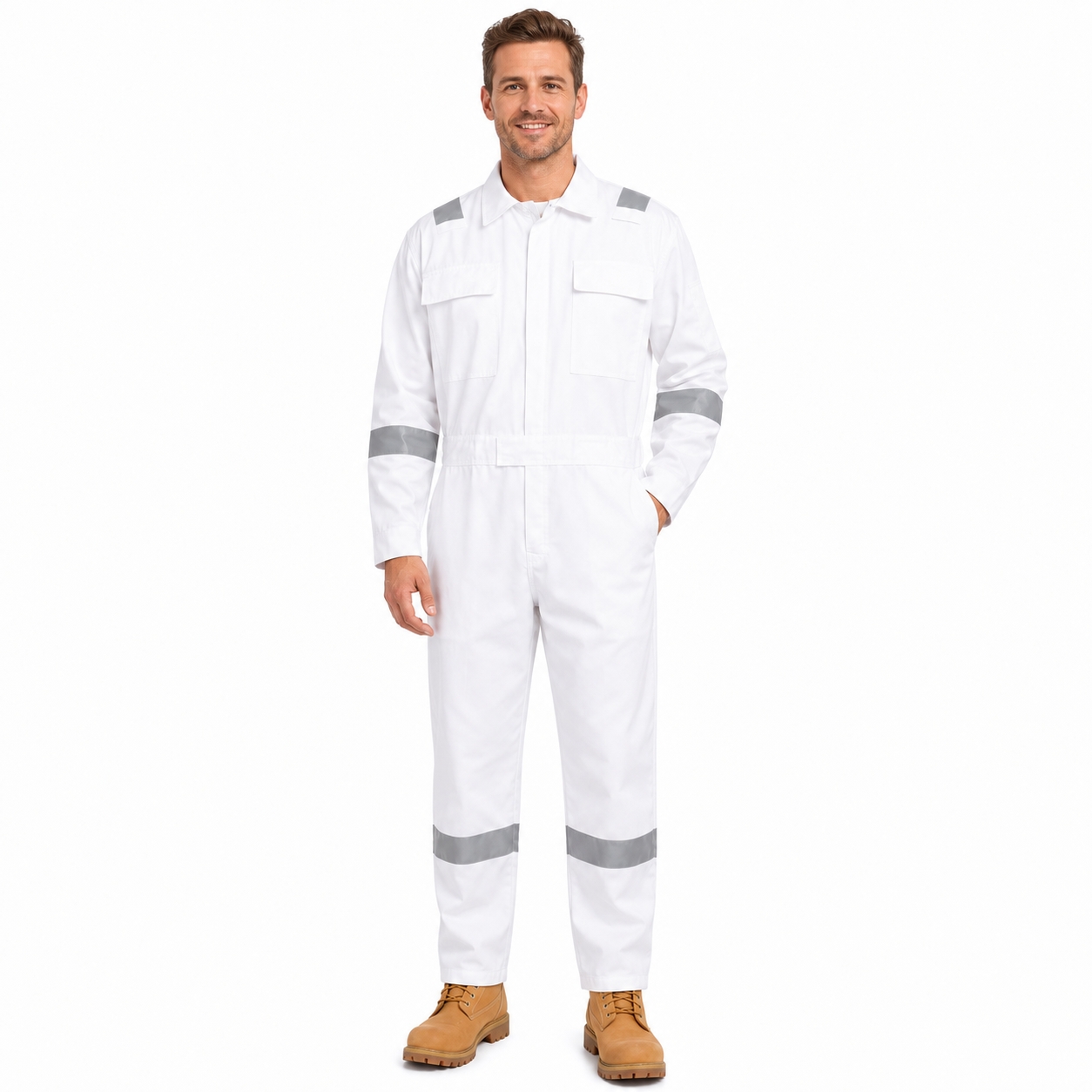
100% Cotton Coveralls with Reflective Tape — 175 GSM & 270 GSM
Why Fabric Weight Matters in Hot Climates
Southeast Asian work sites face different challenges than factories in Europe or North America. When you're working outdoors in 35°C heat with 80% humidity, wearing the wrong coverall can lead to heat exhaustion fast. Lightweight cotton coveralls with lower GSM ratings allow air to move through the fabric, which helps sweat evaporate and keeps your body temperature down.
Here's what happens with different fabric weights in tropical conditions:
- 175 GSM fabrics breathe easily and dry quickly after sweating
- 270 GSM fabrics trap more heat but protect better against sparks and abrasions
- Anything over 300 GSM becomes uncomfortable for outdoor work in humid weather
- The wrong weight can reduce productivity by 15-20% according to workplace safety studies
Matching GSM to Your Work Environment
Not all jobs need the same fabric weight. A dock worker loading containers in direct sunlight needs something completely different than a mechanic working inside an air-conditioned workshop. The table below breaks down which GSM range works best for different types of work.
| GSM Range | Fabric Feel | Best For | Climate Suitability |
|---|---|---|---|
| 150-180 GSM | Lightweight | Outdoor labor, logistics | Hot & humid |
| 200-250 GSM | Medium weight | General maintenance | Moderate climates |
| 260-300 GSM | Heavy duty | Workshops, welding prep | Indoor or cooler weather |
| 300+ GSM | Extra heavy | Cold storage, winter work | Cold environments |
Our 175 GSM cotton coveralls hit that sweet spot for outdoor work in tropical regions, while the 270 GSM version handles tougher workshop tasks. Many suppliers in Singapore and across Southeast Asia only stock one weight option, which forces buyers to compromise on either comfort or durability.
What the Numbers Actually Mean for Workers
Understanding GSM helps you make smarter purchasing decisions, but workers care more about how the coverall feels during an eight-hour shift. A 175 GSM coverall weighs about the same as a regular cotton t-shirt, while a 270 GSM feels closer to a denim jacket.
Here's how different GSM ratings affect daily wear:
- Lower GSM fabrics (150-180) feel almost like wearing regular clothes
- They wash and dry faster, which matters for workers doing laundry frequently
- Higher GSM (260-300) provides better protection from sharp edges and hot surfaces
- Heavier fabrics last longer but cost more to ship due to weight
The difference between coveralls and overalls also affects how GSM impacts comfort, since full-body coverage in heavy fabric traps more heat than bib-style overalls. Choosing the right GSM based on actual work conditions can mean the difference between workers who stay productive all day and those who need frequent breaks to cool down.
175 GSM Cotton Coveralls for Hot Outdoor Work
Workers in Southeast Asia face a daily challenge that most safety gear manufacturers ignore: staying protected while not collapsing from heat exhaustion. The 175 GSM cotton coverall solves this problem by using a plain weave cotton fabric that weighs just enough to protect skin but light enough to let air move through. This fabric weight works best for outdoor construction sites, logistics yards, and marine deck operations where temperatures regularly hit 35°C with 80% humidity. The difference between a worker actually wearing their PPE versus leaving it in their locker often comes down to whether they can breathe in it.
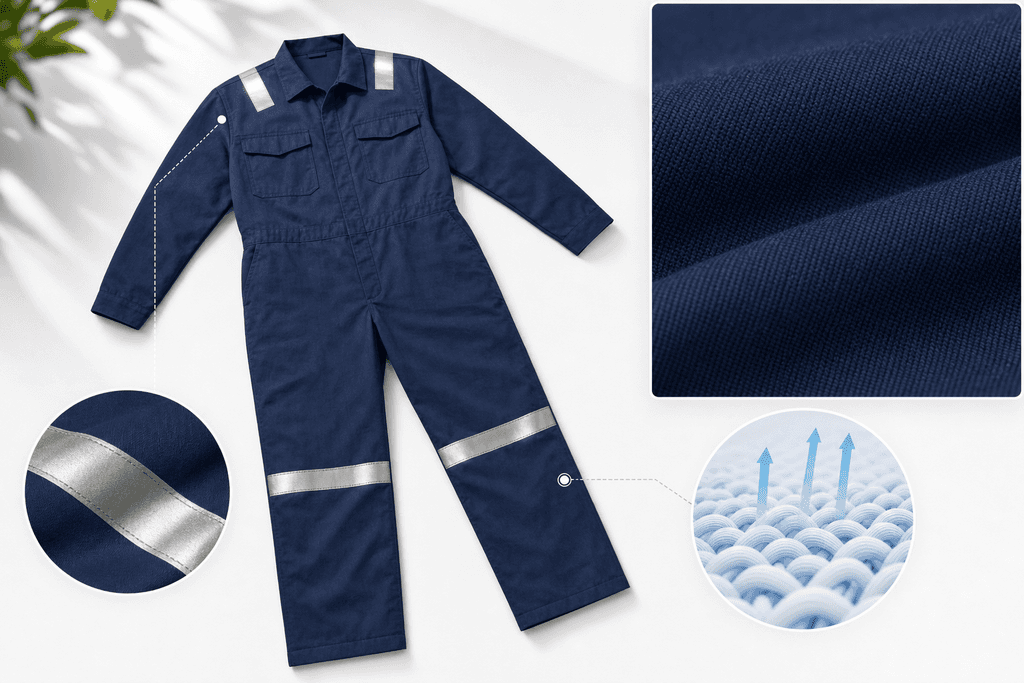
The plain weave structure matters more than most procurement teams realize. Unlike synthetic blends that trap heat against the skin, 100% cotton fibers absorb moisture and release it through evaporation. This natural cooling effect keeps core body temperature lower during long shifts.
Best applications for 175 GSM lightweight cotton coveralls:- Port operations and container handling in direct sunlight
- Road construction and infrastructure projects
- Marine deck maintenance and painting work
- Warehouse logistics in non-air-conditioned facilities
- Light mechanical work in outdoor settings
The reflective tape placement on shoulders, sleeves, and legs provides visibility without adding the bulk that heavier safety vests create. For teams working near moving equipment or vehicles, this integrated visibility feature means one less layer workers need to put on. The tape meets Southeast Asian safety standards while keeping the overall garment weight down.
Sizing becomes critical when you're ordering for diverse crews. The 175 GSM cotton coveralls come in both European and Asian fits from M to 5XL because a coverall that's too tight restricts movement and increases heat stress. Asian fit typically runs one size smaller in the chest and shoulders compared to European cut, which matters when your workforce includes both local hires and expat supervisors.
| Work Environment | 175 GSM Advantage | Limitation |
|---|---|---|
| Outdoor 30-40°C | Maximum breathability | Less abrasion protection |
| High humidity | Fast moisture wicking | May need frequent washing |
| Light duty tasks | All-day comfort | Not for heavy grinding |
270 GSM Cotton Coveralls for Workshop and Yard Use
The 270 GSM option uses the same 100% cotton construction but with a denser weave that stands up to rougher work conditions. Shipyard welders, mechanical workshops, and equipment maintenance teams need this extra fabric weight because their work involves constant contact with sharp edges, hot surfaces, and abrasive materials. The heavier fabric doesn't tear as easily when workers crawl under machinery or brush against rough steel. But here's what most safety officers miss: 270 GSM still breathes better than any polyester blend at the same weight.
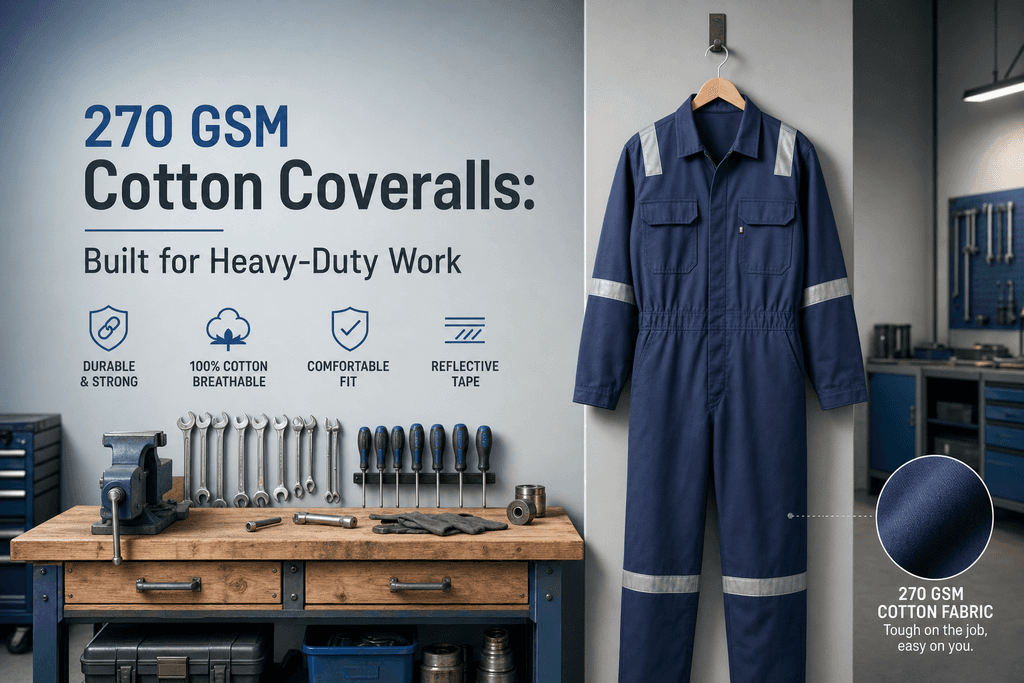
The durability difference shows up in cost per wear calculations. A 175 GSM coverall might last 6 months in a machine shop before developing holes, while the 270 GSM version can go 12-18 months in the same conditions. That's half the replacement frequency even though the upfront cost is the same at $49.99 USD.
When to choose 270 GSM over 175 GSM:- Workshop environments with grinding or welding sparks
- Shipyard steel work and heavy fabrication
- Equipment maintenance involving oils and solvents
- Tasks requiring kneeling on concrete or rough surfaces
- Jobs where coveralls contact sharp metal edges regularly
The trade-off comes down to temperature versus durability. In air-conditioned workshops, the 270 GSM weight works fine all day. But for outdoor yard work in tropical heat, workers will struggle with the extra fabric unless they're in shaded areas or working shorter shifts. Some companies split their inventory, keeping 175 GSM for field crews and 270 GSM for shop teams.
Both weights use the same reflective tape configuration and come in six color options. Darker colors like navy and black hide stains better in mechanical environments, though they do absorb more heat in direct sun. Lighter colors reflect heat but show oil and grease marks faster, which matters for client-facing work sites.
| Feature | 175 GSM | 270 GSM |
|---|---|---|
| Fabric weight | Lightweight | Medium-heavy |
| Best temperature | 30-40°C outdoor | 25-35°C indoor/shade |
| Abrasion resistance | Moderate | High |
| Typical lifespan | 6-9 months heavy use | 12-18 months heavy use |
| Price | $49.99 USD | $49.99 USD |
Reflective Tape, Sizing, and Customization Options
The reflective tape on these coveralls sits on the shoulders, upper sleeves, and lower legs where vehicle operators and equipment drivers actually look. This placement follows ISO 20471 standards that most Southeast Asian safety regulations reference, though specific requirements vary by country. Singapore's Workplace Safety and Health guidelines, for example, require high-visibility clothing for workers near moving vehicles, and the tape configuration on both the 175 GSM and 270 GSM versions meets these requirements without needing additional vests.
Choosing between European and Asian fit affects more than just comfort. European fit has broader shoulders and a longer torso, while Asian fit accommodates shorter torsos with less taper at the waist. Getting this wrong means either restricted movement or excess fabric that catches on equipment. The size range from M to 5XL covers most body types, but procurement teams should collect actual measurements rather than assuming shirt sizes translate directly to coverall sizes.
Sizing selection checklist for bulk orders:- Measure chest, waist, and inseam for 10% of your workforce as a sample
- Check if your team is primarily Asian or European body types
- Order one size up if workers wear thick undergarments
- Consider shrinkage: cotton can shrink 2-3% after first wash
- Keep 5-10% extra inventory in common sizes (L, XL, 2XL)
Custom logo printing or embroidery adds company branding without compromising the fabric's breathability. Embroidery lasts longer through industrial washing but costs more per unit. Screen printing works fine for logos on the chest or back and holds up well if you're using proper industrial laundry services. Most distributors and manning agencies order custom work for brand recognition and theft prevention, since workers are less likely to walk off with clearly marked company property.
The six color options include navy, black, grey, orange, red, and khaki. Orange and red provide additional visibility for roadwork or port operations, while navy and black suit client-facing environments where appearance matters. Color choice also affects heat absorption, with lighter colors reflecting up to 30% more solar radiation than dark colors according to industrial workwear studies.
RigArmor supplies these coveralls direct from factory to distributors, ship chandlers, manning agencies, and contractors across Southeast Asia. The pricing stays consistent at $49.99 USD for both fabric weights, which simplifies inventory management when you're ordering for multiple work environments. For teams that need more guidance on choosing between one-piece coveralls and two-piece options, this comparison of coverall versus two-piece workwear covers the practical differences for different job types.
Real Cost Analysis for Southeast Asian Buyers
Most procurement managers in Southeast Asia focus on the unit price when ordering lightweight cotton coveralls, but the real cost story runs much deeper. A $30 coverall that needs replacing every three months actually costs more than a $50 coverall that lasts a year. The math gets even more complicated when you factor in heat stress incidents, worker complaints, and the hidden expenses of dealing with multiple middlemen in the supply chain. Understanding the total cost of ownership means looking at durability, supplier reliability, and what happens when things go wrong.
Factory Direct Pricing Versus Distributor Markups
The traditional supply chain for workwear in Southeast Asia typically adds 40-60% to the factory price by the time coveralls reach your warehouse. Direct factory sourcing eliminates two or three markup layers that distributors, importers, and local agents add to the final price. RigArmor's direct supply model connects manning agencies and contractors straight to the manufacturing source, which means the $49.99 price point for 175 GSM lightweight cotton coveralls reflects actual production costs plus a single reasonable margin.
Cost Breakdown: Traditional distributor chains add 40-60% markup | Direct factory pricing saves $15-25 per unit on bulk orders | Heat stress claims average $2,500-5,000 per incident in Southeast Asia
Bulk Order Economics That Actually Matter
Manning agencies and labour-hire firms ordering 500+ units unlock pricing tiers that change the entire budget equation. The per-unit cost drops significantly, but more importantly, consistent quality across large batches means fewer returns and replacements.
- Orders of 500-1,000 units typically reduce per-unit costs by 15-20%
- Custom logo printing or embroidery becomes cost-effective at 300+ units
- Bulk orders allow for size distribution planning based on actual workforce demographics
- Single-source supply reduces administrative overhead and quality control complexity
Hidden Costs of Cheap Coveralls
Poor-quality coveralls create expenses that never show up on the initial purchase order. Workers in hot climates who suffer heat stress because their coveralls trap moisture generate medical claims, lost productivity, and potential legal liability. Fabric that tears after two weeks means you're buying replacements at three times the annual rate you budgeted for.
| Cost Factor | Low Quality Impact | Quality Coverall Impact |
|---|---|---|
| Replacement Frequency | Every 2-3 months | Every 10-12 months |
| Heat Stress Incidents | 3-5 per 100 workers | 0-1 per 100 workers |
| Worker Complaints | High turnover factor | Minimal issues |
Lead Times and Regional Shipping
Southeast Asian buyers need to plan for 3-6 week lead times for quality lightweight cotton coveralls, depending on customization requirements and order size. Rush orders cost 20-30% more and often compromise on quality checks. Smart procurement teams order quarterly based on predictable workforce needs rather than scrambling for emergency shipments when inventory runs out.
- Standard orders ship within 3-4 weeks from order confirmation
- Custom logo printing adds 1-2 weeks to production time
- Sea freight to major Southeast Asian ports takes 7-14 days
- Air freight cuts delivery time but adds $8-12 per unit to costs
Quality Verification Before Large Orders
Safety officers should request fabric samples and test reports before committing to orders of 500+ units. The fabric weight specification matters because some suppliers label 160 GSM fabric as 175 GSM, which affects both durability and heat management. Checking the workwear fabric specifications guide helps you understand what questions to ask suppliers about cotton quality and weave density.
- Request certified fabric weight test results from independent labs
- Verify reflective tape meets EN ISO 20471 or equivalent regional standards
- Test wash durability with sample pieces through 10+ wash cycles
- Confirm stitching quality at stress points like crotch and armpit seams
- Check zipper and button quality under repeated use conditions
The direct supply model matters because it gives you access to the factory's quality control process rather than accepting whatever a middleman delivers. When issues arise, you're talking directly to the people who can fix them instead of playing telephone through three layers of distributors.
Making the Right Choice for Your Team
Picking the right lightweight cotton coveralls comes down to matching fabric weight with your actual work conditions. The 175 GSM option works best for outdoor crews in hot, humid climates where breathability matters most, while 270 GSM handles heavier workshop tasks where durability takes priority. Most safety officers find that having both weights on hand gives them flexibility across different job sites and seasons.
The math on total cost gets interesting when you factor in how long the coveralls last and whether your workers actually wear them properly. Cheaper synthetic options might save money upfront, but if your crew is constantly overheating or the fabric tears after a few washes, you end up spending more on replacements. Cotton holds up better to industrial washing and keeps workers comfortable enough that compliance stops being a daily battle.
Sizing matters more than most procurement teams realize. Your workforce demographics determine whether you need European or Asian fits, and having options up to 5XL means you can actually outfit everyone properly. Our 100% cotton coveralls come in both fit types specifically because we work with crews across Southeast Asia where one-size-fits-all approaches fail.
Direct factory relationships cut out the middleman markup that distributors and ship chandlers usually pay. Volume buyers who work directly with manufacturers typically save 20-30% compared to going through multiple supply chain layers, which adds up fast when you're outfitting entire crews or multiple vessels.
The questions that come up most often about fabric weight, care instructions, and bulk ordering have some nuances worth understanding before you place an order.
Common Questions About Lightweight Cotton Coveralls
Safety officers and procurement teams ask us the same questions every week about cotton coveralls. Most want to know if they're getting the right weight for their crew, whether the fabric meets local standards, and how long orders actually take to arrive. Here are the answers that matter most when you're placing an order for your team.
How do I choose between 175 GSM and 270 GSM?
The 175 GSM works best for outdoor crews in hot, humid conditions where breathability matters more than heavy-duty protection. If your workers are in workshops, handling rough materials, or need extra durability for yard work, the 270 GSM holds up better against wear and tear. Think of it this way: lighter weight for heat, heavier weight for tough jobs.
Does 100% cotton meet safety standards in Southeast Asia?
Yes, 100% cotton coveralls meet most general workplace safety requirements across Southeast Asia for non-flame environments. Cotton is naturally breathable and doesn't melt onto skin like synthetic fabrics can in certain conditions. However, if your worksite requires specific flame-resistant or arc-rated protection, you'll need specialized FR-treated garments instead.
What are the minimum order quantities for custom branding?
Most suppliers including us require minimum orders of 50-100 pieces for custom logo printing or embroidery. The exact minimum depends on the complexity of your logo and whether you want printing or embroidery. Embroidery typically has higher minimums because of setup costs, while printing can sometimes work with smaller batches.
How long do bulk orders take to reach Southeast Asian locations?
Standard lead times run 3-4 weeks for stock items without customization, and 5-6 weeks when you add custom branding. Shipping within Southeast Asia usually adds another 5-7 days depending on your exact location. Rush orders are possible but cost more and aren't always guaranteed during peak seasons.
What care instructions actually extend coverall lifespan?
Wash in cold or warm water, never hot, because high heat breaks down cotton fibers faster. Skip the bleach unless absolutely necessary, and always air dry or use low heat in the dryer. The reflective tape lasts longer when you turn coveralls inside out before washing. Most quality lightweight cotton coveralls like our 175 GSM and 270 GSM options last 50-75 washes with proper care.
How does reflective tape quality differ between suppliers?
Cheap reflective tape starts peeling or cracking after 10-15 washes, while better quality tape holds up for the life of the garment. The difference comes down to the adhesive backing and the quality of the reflective material itself. Some suppliers like workxwear.com and industrialuniform.com.sg use lower-grade tape to cut costs, but that means replacing coveralls sooner.
