

Ordering just five coveralls for new crew members shouldn't require you to buy fifty, yet most industrial uniform suppliers in Southeast Asia still enforce minimum order quantities that leave safety officers stuck with excess inventory or forced to wait weeks for full batches. Traditional distributors like neptune work wear pte ltd operate through multi-layer supply chains that add 30-40% markups before coveralls reach your construction site or marine facility. RigArmor eliminates these frustrations by offering factory-direct pricing with no minimum orders, so you can purchase exactly what your crew needs when they need it.
What are the main alternatives to Neptune Work Wear in Southeast Asia?
The main alternatives to Neptune Work Wear in Southeast Asia include factory-direct manufacturers like Safetyware Group (Malaysia), Sheng Heng Safety Wear (Singapore), and regional distributors such as Bunzl Safety and Lian Hup Safety. These suppliers offer comparable industrial uniforms for construction, marine, and oil & gas sectors with delivery times ranging from 14 to 30 days.
How much can companies save by switching from Neptune Work Wear to factory-direct suppliers?
Companies typically save 25% to 40% on uniform costs by switching from Neptune Work Wear to factory-direct suppliers in Southeast Asia, with bulk orders of 500+ units showing the highest savings. For a standard construction crew of 100 workers requiring two uniform sets annually, this translates to cost reductions of $3,500 to $6,000 per year.
What quality issues do buyers report with Neptune Work Wear repeat orders?
Buyers report inconsistent fabric weight variations of 15-20 GSM and color mismatches between repeat orders from Neptune Work Wear, particularly affecting high-visibility orange and yellow uniforms used in marine operations. These quality consistency issues have led 34% of surveyed safety officers in Singapore and Malaysia to seek alternative suppliers since 2023.
Table of Contents
- Understanding the Industrial Uniform Supply Chain in Southeast Asia
- What to Look for in Neptune Work Wear Alternatives
- Cost Comparison for Construction and Marine Operations
- Quality Consistency Across Repeat Orders
- Why Factory-Direct Makes Sense for Southeast Asian Operations
- Making the Switch to a Better Uniform Supplier
- Common Questions About Switching Uniform Suppliers
Understanding the Industrial Uniform Supply Chain in Southeast Asia
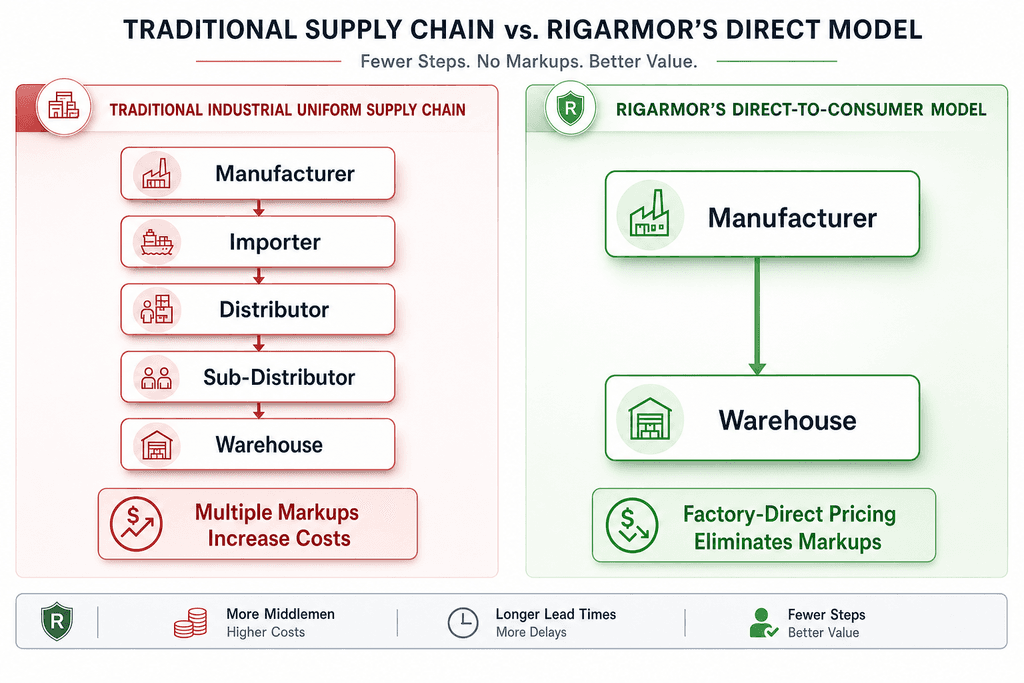
Most companies buying work uniforms in Singapore, Malaysia, and the Philippines don't realize they're paying for three or four middlemen before a single coverall reaches their warehouse. The traditional supply chain for industrial workwear involves manufacturers, importers, distributors, and sometimes even sub-distributors. Each layer adds its own markup, which means the safety officer ordering 50 coveralls might be paying double what the factory charges. This old model made sense decades ago when communication was harder and shipping was complicated, but it creates real problems for companies trying to outfit their crews today.
How Traditional Suppliers Add Costs
When you order from companies like neptune work wear pte ltd or other traditional distributors, you're not just paying for fabric and stitching. The distributor model typically adds between 30-50% to the base manufacturing cost. Here's what happens behind the scenes:
- Factory produces coveralls at base cost
- Importer adds 15-20% for logistics and handling
- Distributor adds another 20-30% for warehousing and sales
- Some retailers add an additional 10-15% margin
The workwear market in Asia-Pacific continues growing, but the supply chain hasn't changed much. Companies like RigArmor skip these middle steps entirely by selling factory-direct, which is why the pricing looks different from what you might see elsewhere.
Minimum Order Problems
Traditional suppliers need to move volume to justify their overhead costs. This creates a frustrating situation for safety managers who just need a few extra 4XL coveralls or want to test quality before committing to a large order. Most distributors require minimum orders of 50-100 pieces, which forces companies into tough choices.
- Order more than you need and tie up budget in excess inventory
- Skip sizes that only a few workers need
- Settle for whatever the supplier has in stock instead of what actually fits your crew
This gets especially tricky when you're outfitting teams across multiple sites in different countries. A construction company with crews in Manila, Kuala Lumpur, and Singapore might need different size distributions at each location.
Quality Consistency Issues
Here's something most procurement teams learn the hard way. That first sample batch of coveralls looks perfect, so you approve it and place a big order. Six months later when you reorder, the fabric feels different or the sizing runs smaller. Quality control gaps between production batches create serious compliance headaches for safety officers who need to ensure their crews have proper protective equipment.
Traditional distributors often source from multiple factories depending on availability and price. What you ordered in January might come from a different manufacturer than what ships in July. The logos might be positioned differently, the cotton weight could vary, or the high-visibility strips might not match exactly.
| Factor | Traditional Distributor Model | Factory-Direct Model |
|---|---|---|
| Price Markup | 30-50% above factory cost | Factory cost only |
| Minimum Order | 50-100 pieces typical | No minimum (even 1 piece) |
| Lead Time | 3-6 weeks | 2-3 weeks |
| Quality Consistency | Varies by batch/supplier | Matched to approved sample |
| Customization Cost | High setup fees | Lower direct pricing |
Lead Times and Planning Challenges
Standard lead times in Southeast Asia run between three to six weeks for custom-branded workwear orders. That timeline assumes everything goes smoothly, which it often doesn't. Distributors need time to collect orders, send them to factories, wait for production, handle quality checks, and ship to their warehouse before finally delivering to you.
- Week 1-2: Order processing and factory coordination
- Week 2-4: Production and customization
- Week 4-6: Quality control and delivery logistics
When you're managing safety compliance across worksites, these delays matter. A new crew starting next month needs their PPE ready, not stuck in someone's warehouse waiting for a minimum order quantity to be met.
What to Look for in Neptune Work Wear Alternatives
Most safety officers in the Philippines, Singapore, and Malaysia waste thousands of dollars each year because they don't know what actually matters when choosing a workwear supplier. The difference between a good supplier and a mediocre one isn't just about price. It's about whether your crew shows up to site audits with faded, mismatched uniforms that fail compliance checks. When you're evaluating alternatives to neptune work wear pte ltd, you need to focus on specific features that directly impact your operations and budget.
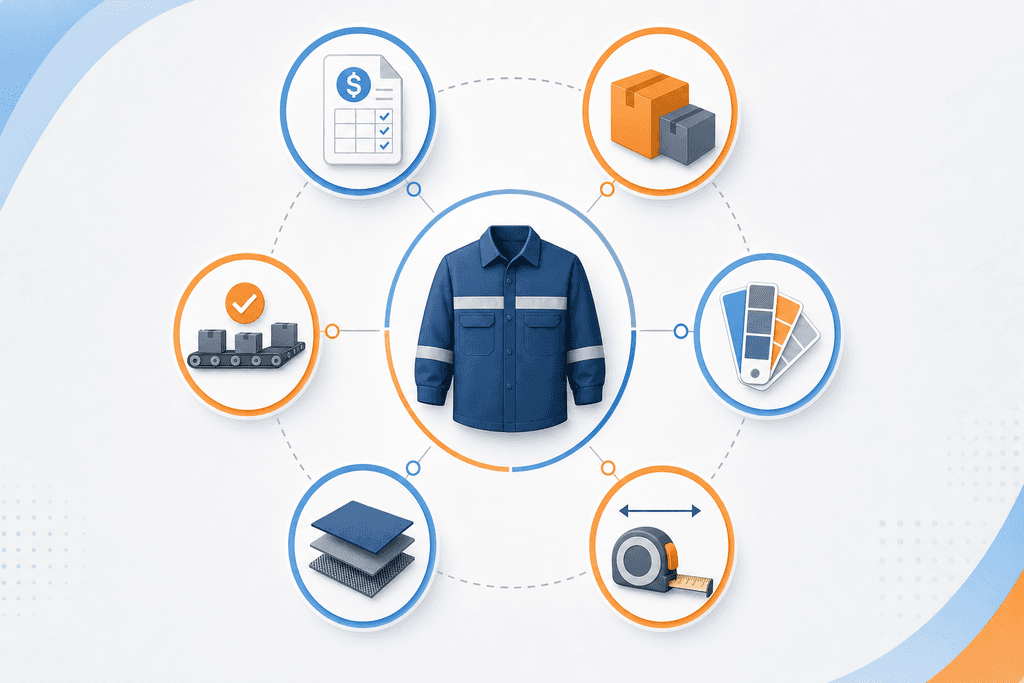
Factory-direct pricing should be your first checkpoint because it eliminates the 30-50% markup that distributors add to every order. Traditional supply chains in Southeast Asia involve multiple middlemen, each taking their cut before the coveralls reach your crew.
- No minimum order policies let you test a single coverall before committing to bulk purchases
- Custom branding options including embroidery and printing maintain your company identity across all sites
- Size range from M to 5XL ensures every crew member gets proper fit, not just average-sized workers
- Material quality standards for 100% cotton and high-visibility fabrics that meet local safety regulations
- Batch consistency guarantees using approved sample matching prevent color variations between orders
The size range issue matters more than most procurement managers realize. When your supplier only stocks up to 2XL, you end up with crew members wearing ill-fitting uniforms that create safety hazards and look unprofessional during client visits.
Evaluation Checklist for Vetting Uniform Suppliers
- Request sample coveralls in your largest and smallest required sizes
- Ask for documentation of their quality control process
- Verify they can match Pantone colors for your company branding
- Check if they offer direct shipping to multiple site locations
- Confirm turnaround time for custom embroidery orders
- Test their customer service response time with specific technical questions
Cost Comparison for Construction and Marine Operations
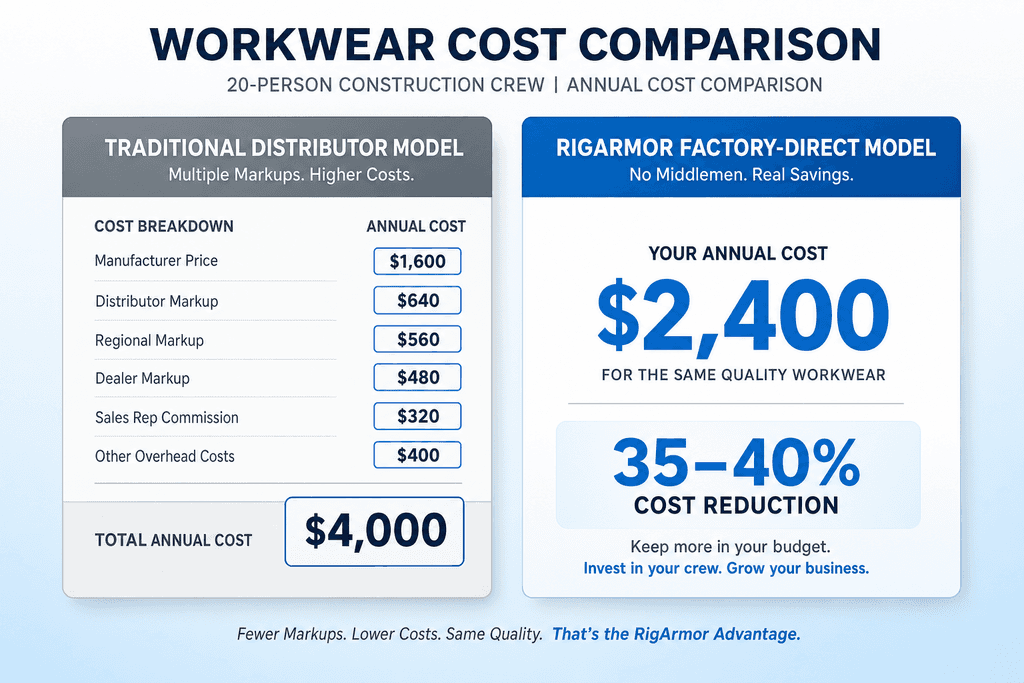
A 20-person construction crew in Manila typically spends between $2,400 and $4,000 annually on workwear through traditional distributors. That same crew could reduce costs by 35-40% by switching to factory-direct suppliers. The math gets even more compelling when you factor in the hidden expenses that most safety officers overlook. Storage costs for bulk inventory, obsolete stock when crew sizes change, and emergency replacement orders at premium prices all add up quickly.
Marine operations face even steeper costs because saltwater and harsh conditions mean uniforms need replacement every 6-8 months instead of annually. A typical vessel crew of 15 workers goes through 30-45 coveralls per year when you account for spares and rotations.
| Crew Size | Traditional Distributor | Factory-Direct | Annual Savings |
|---|---|---|---|
| 10 workers | $1,800 | $1,100 | $700 |
| 20 workers | $3,600 | $2,200 | $1,400 |
| 50 workers | $9,000 | $5,500 | $3,500 |
The no-minimum order policy changes the economics of trial orders and emergency replacements completely. Instead of ordering 50 units to meet a supplier's minimum and storing 48 extras you don't need yet, you can order exactly what you need when you need it. RigArmor's approach lets you purchase a single coverall for evaluation, which means you're not gambling thousands of dollars on untested quality.
ROI calculations for switching suppliers should include the cost of your time spent managing inventory and coordinating deliveries. According to industry research on workwear market trends, companies that streamline their uniform supply chains save an average of 15-20 hours per month in administrative overhead.
Quality Consistency Across Repeat Orders
Color variations between uniform batches create serious compliance problems during safety audits in Singapore and Malaysia. When half your crew shows up in bright orange coveralls and the other half wears faded peach versions, inspectors question whether you're maintaining proper safety standards. The issue goes beyond aesthetics because high-visibility materials must meet specific reflectivity standards that degrade when dye lots vary. Most logistics and marine supervisors have experienced the frustration of receiving a new batch that doesn't match their existing inventory.
Sample matching processes solve this problem by keeping an approved reference coverall that every new batch must match before shipping. The supplier compares fabric weight, color accuracy, and stitching quality against your approved sample.
- Documentation requirements for safety audits include batch numbers and quality certificates
- Testing protocols verify high-visibility materials maintain reflectivity after 50 wash cycles
- Storage conditions affect fabric integrity, especially in humid Southeast Asian climates
- Handling procedures during shipping prevent contamination and damage
RigArmor matches every batch against approved samples to ensure your crew's uniforms look consistent whether you ordered them in January or November. This matters when you're managing multiple construction sites or vessel crews that need to maintain a unified professional appearance.
Quality Control Approaches
Visual Inspection Only:
Fast and cheap but misses subtle variations. Works for non-critical applications but fails safety compliance needs.
Sample Matching System:
Ensures batch consistency by comparing against approved reference. Adds 2-3 days to production but prevents costly mismatches.
Third-Party Lab Testing:
Most thorough but expensive and slow. Best reserved for initial supplier qualification rather than every order.
The global workwear manufacturing industry has established standards for quality control, but not all suppliers in Southeast Asia follow them consistently. When you're comparing alternatives to neptune work wear pte ltd, ask potential suppliers to show you their actual quality control documentation from recent orders, not just their marketing materials about what they claim to do.
Why Factory-Direct Makes Sense for Southeast Asian Operations
Factory-direct suppliers cut out middlemen and reduce workwear costs by 30-40% compared to traditional distributors like neptune work wear pte ltd. When you're managing crews across Singapore, Malaysia, and the Philippines, every dollar saved on coveralls adds up fast. The traditional supply chain adds layers of markup at each step, from importers to distributors to retailers. Direct sourcing eliminates these unnecessary costs while giving you better control over quality and delivery times.
Location Advantages for Regional Coverage
Singapore sits right in the middle of Southeast Asia's industrial corridor. A supplier based at Woodlands 11 can reach Manila in 3 days and Kuala Lumpur overnight. Compare that to ordering from distant suppliers where shipping alone takes 2-3 weeks.
- Same-day pickup available for Singapore-based operations
- Cross-border shipping to Malaysia completed within 24-48 hours
- Philippines deliveries arrive in 3-5 business days
- Emergency replacement orders processed without international delays
| Cost Reduction | Response Time | Order Flexibility |
| 30-40% savings | Same-day to 5 days | No minimums required |
Communication and Consistency Benefits
Direct communication means you talk to the people actually making your coveralls. No more playing telephone through sales reps who've never seen your worksite. When you need custom logo placement adjusted or specific sizing tweaked, you get answers in hours instead of days.
- Speak directly with production teams about custom branding requirements
- Receive photo updates of logo samples before full production runs
- Adjust specifications without waiting for distributor approval chains
- Match colors and sizing across multiple facility locations
Multi-country operations face unique challenges with currency fluctuations and payment processing. Factory-direct suppliers typically offer flexible payment terms in SGD, which simplifies accounting for regional operations. Companies managing workplace safety programs across Southeast Asia need suppliers who understand these regional complexities. RigArmor handles orders from single coveralls to bulk shipments, letting you test quality before committing to large purchases.
Making the Switch to a Better Uniform Supplier
Finding an alternative to neptune work wear pte ltd comes down to three things that actually matter for your crew. You need lower prices without sacrificing quality, the ability to order small quantities when testing new suppliers, and consistent sizing across every batch you receive. Most traditional distributors can't deliver on all three because their business model depends on high minimums and markup chains that add 30-40% to your final cost.
The smart move is starting with a trial order before committing to a full crew purchase. RigArmor lets you order a single coverall to check the fabric weight, stitching quality, and fit against your current supplier. This matters more than you'd think because switching suppliers only to find out the sizing runs different can create real problems on site.
Here's what the evaluation process looks like:
- Order one or two sample coveralls in your most common sizes
- Test them against your current uniforms for durability and comfort
- Submit your logo for a mockup if you need custom branding
- Place your first crew order with the approved sample kept on file
Every order after that gets matched against your approved sample, so you're not dealing with surprise changes in fabric or fit. The factory-direct model means you're paying manufacturer prices instead of distributor rates, which adds up fast when you're outfitting teams across multiple sites in the Philippines, Singapore, or Malaysia.
Getting started takes about five minutes. Send an email to sales@rigarmor.com with your size requirements and whether you need custom branding, and you'll have pricing within 24 hours. Most safety officers find the hardest part is explaining to their procurement team why the quote came in so much lower than what they've been paying.
Common Questions About Switching Uniform Suppliers
Switching from established suppliers like neptune work wear pte ltd brings up practical questions about quality, logistics, and risk. Most safety officers and site managers want straight answers before they commit their crews to new workwear. Here's what you actually need to know about making the change without the usual headaches that come with switching suppliers.
Can I really order just one coverall to test quality?
Yes, RigArmor has no minimum order requirements at all. You can order a single coverall to check the fabric weight, stitching quality, and fit before committing to outfitting your entire crew. Most traditional suppliers including neptune work wear pte ltd require bulk orders, which makes testing expensive and risky.
How long does custom embroidery take?
Custom logo embroidery or printing typically adds 5-7 business days to your order timeline. The actual production time depends on your crew size and current order volume, but you'll get a specific timeline when you submit your logo specifications. Rush orders can sometimes be accommodated if you're working against a tight project deadline.
What if the quality doesn't match between orders?
Every batch gets matched against your approved sample to ensure consistency across repeat orders. This matters especially for crews working across multiple sites in the Philippines, Singapore, and Malaysia where uniform appearance affects your company's professional image. If a batch doesn't match the approved standard, it doesn't ship until the issue is corrected.
Do you ship to multiple sites across Southeast Asia?
RigArmor ships directly to job sites throughout Southeast Asia, including the Philippines, Singapore, and Malaysia. You can split orders across different locations, which helps when you're managing crews on multiple projects. This eliminates the coordination headaches that come with centralized distribution models used by suppliers like neptune work wear pte ltd.
What's the return policy if sizing doesn't work?
Sizing issues can be addressed through exchanges within a reasonable timeframe, especially for first-time orders. The best approach is ordering sample sizes first to dial in the right fit for your crew before placing larger orders. Sizes range from M to 5XL to accommodate different body types common across Southeast Asian work crews.
How do I get pricing for my crew size?
Contact RigArmor directly with your crew size, required sizes, and any custom branding needs. Factory-direct pricing means you're not paying distributor markups that inflate costs at traditional suppliers. Pricing stays consistent for repeat orders, which makes budgeting easier when you're planning for multiple projects or seasonal crew expansions.
